The Complete Investor’s Guide to Choosing a Real Estate Developer in Dubai
Quick Navigation
- Introduction: The Global Capital Shift to Dubai
- Who This Guide is For
- Our Evaluation Methodology
- The Current Dubai Market Context & Data
- Why Your Choice of Developer Dictates Your ROI
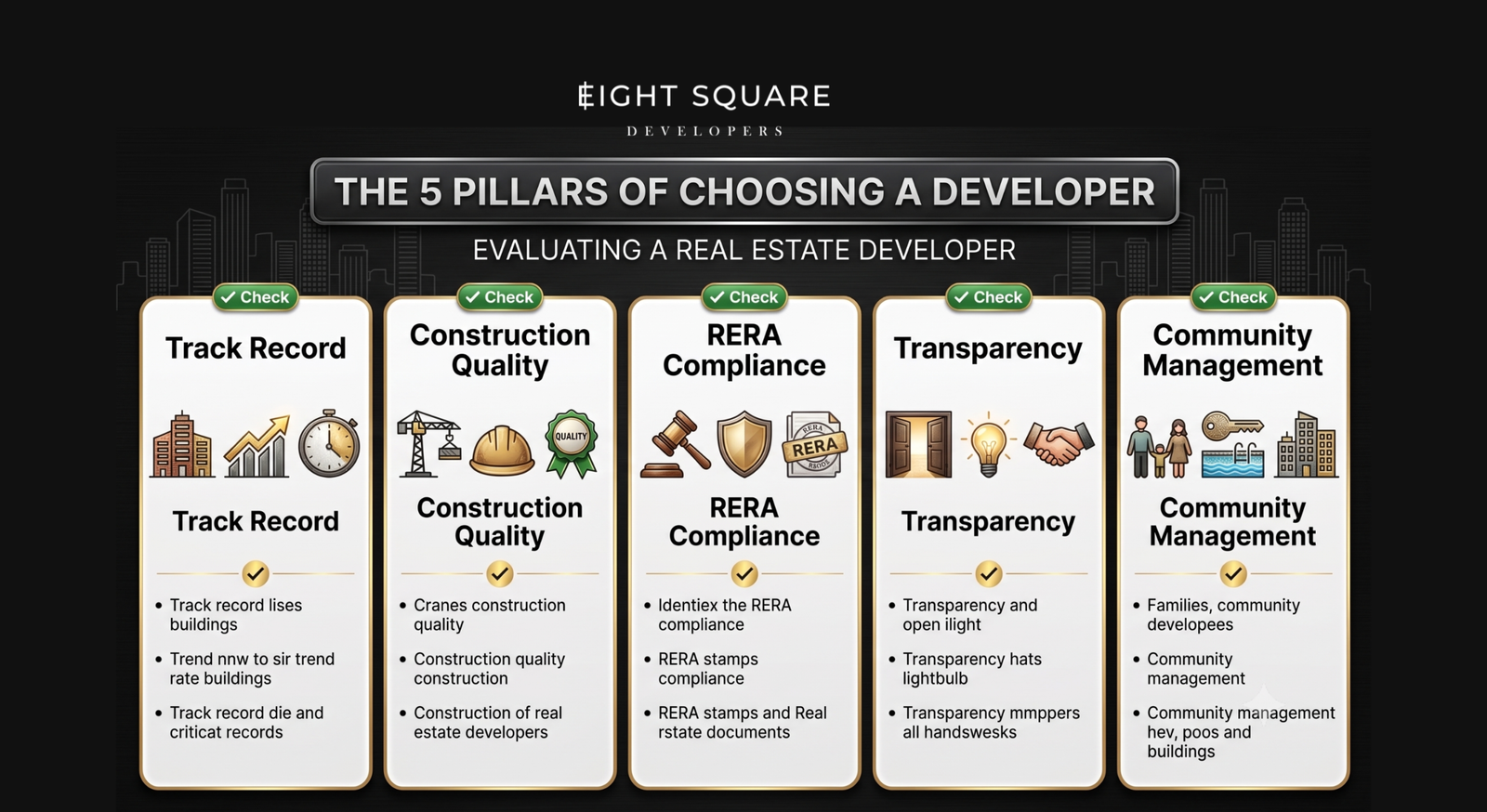
- How to Evaluate a Developer (The Due Diligence Checklist)
- Interactive Developer Trust Scorecard
- Choosing a Developer Based on Your Investment Goal
- Best Developers by Dubai Area (Micro-Location Guide)
- Comprehensive Profiles: Master Developers & Volume Leaders
- Comprehensive Profiles: Emerging & Boutique Developers
- The Extended Developer Comparison Matrix
- Top Investment Mistakes to Avoid
- Frequently Asked Questions (15 FAQs)
- Data Sources & References
Top Real Estate Developers in Dubai play a crucial role in shaping one of the world’s fastest-growing property markets, offering everything from iconic waterfront communities to boutique luxury residences. Whether you’re a first-time homebuyer, an experienced investor, or seeking a property that qualifies for the UAE Golden Visa, choosing the right developer can significantly influence your long-term returns, construction quality, and overall ownership experience. This comprehensive guide explores both established industry leaders and emerging developers, helping you compare their strengths, investment opportunities, and development philosophies so you can make a confident and informed property decision in Dubai.
The Global Capital Shift to Dubai
Dubai has evolved from a regional commercial hub into a primary haven for global wealth allocation. The city continues to experience sustained population inflows driven by strategic government initiatives, a tax-free economic environment, and world-class physical infrastructure.
For institutional funds, international investors, and expatriate homebuyers, purchasing property in Dubai represents a foundational strategy for long-term wealth preservation. The continued success of the 10-Year Golden Visa program has institutionalized foreign direct investment, transforming Dubai’s real estate sector into a highly regulated, mature market.
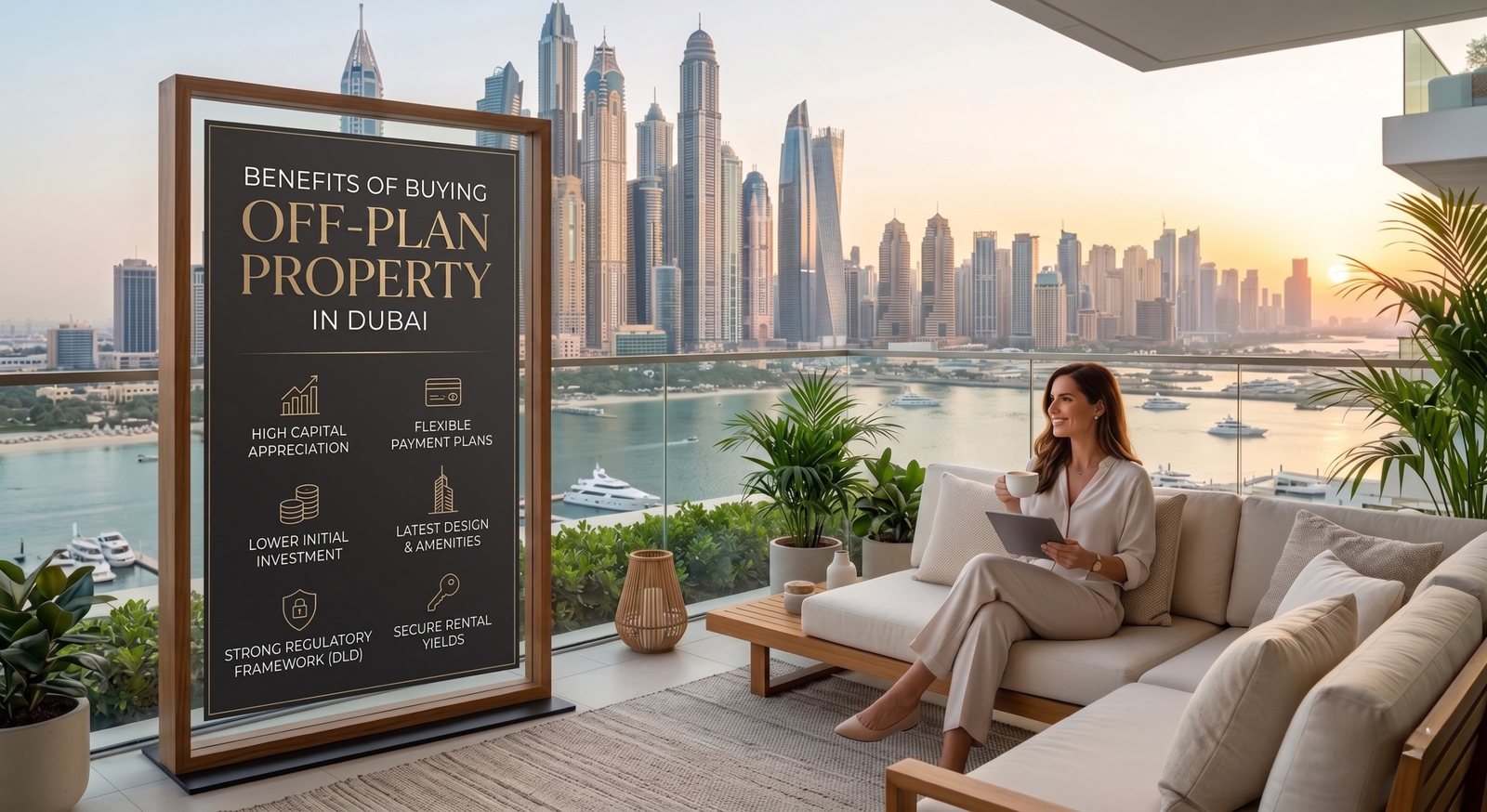
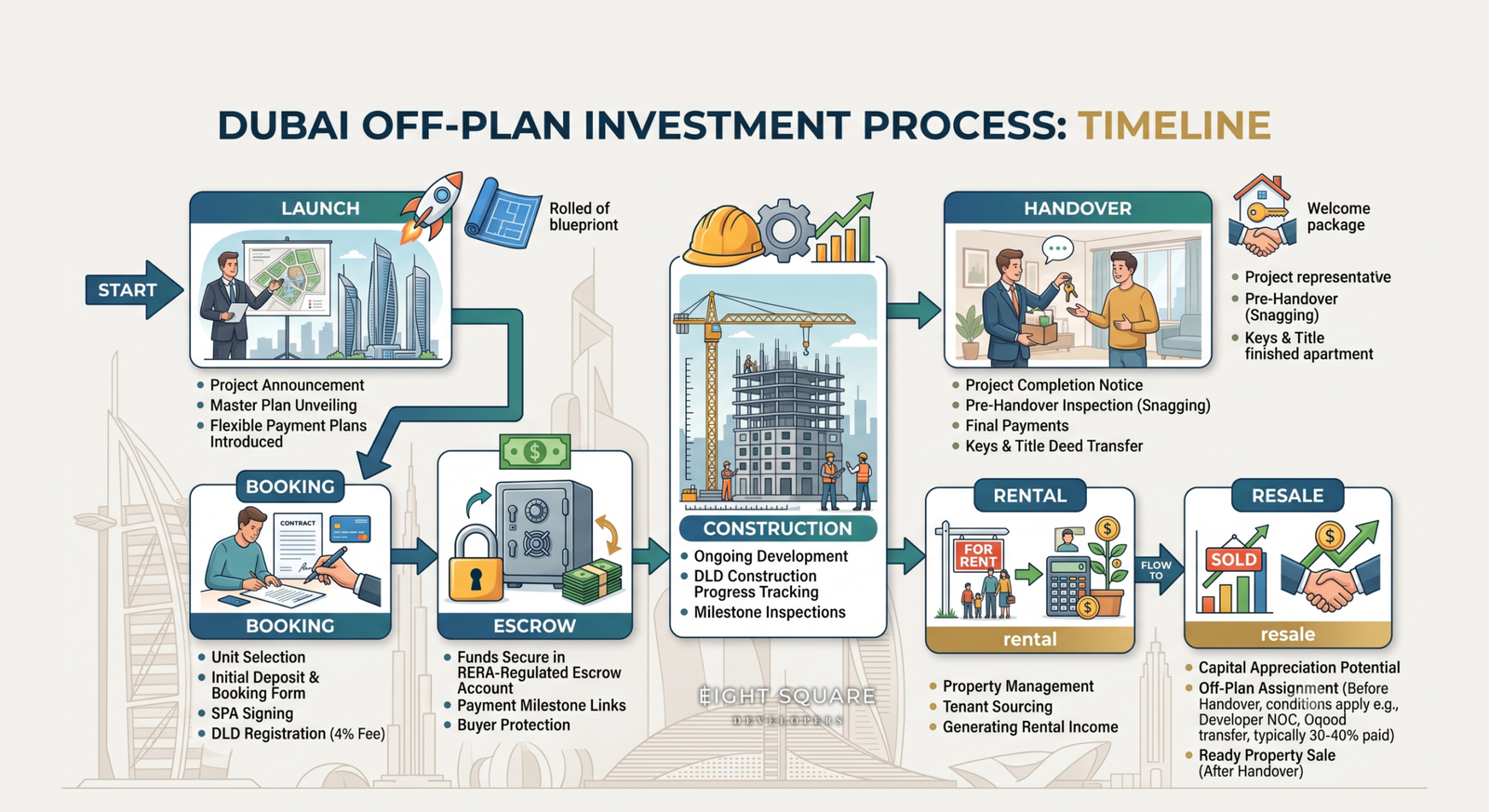
However, executing a successful investment in this landscape requires rigorous due diligence. According to the Dubai Land Department (DLD), the majority of current real estate transactions are off-plan (properties purchased before or during construction). When you invest in off-plan real estate, you are entrusting capital to a corporate entity based on a contractual promise of future delivery.
Therefore, selecting the right real estate developer is the single most critical decision an investor will make—often outweighing the specific micro-location of the asset itself.
Who This Guide Is For
This comprehensive resource moves beyond basic lists to provide actionable market intelligence. It is specifically designed for:
- First-Time Buyers: Seeking to navigate the complexities of DLD regulations, Escrow accounts, and reliable handovers without making costly early mistakes.
- International Investors: Looking for data-backed insights on which builders provide the most seamless remote investment experience and strongest capital security.
- Golden Visa Applicants: Targeting reliable developers with inventory that smoothly fulfills the AED 2,000,000 investment threshold for long-term UAE residency.
- Buy-to-Let Investors: Hunting for developers that produce functional, high-yield layouts with historically strong tenant retention and manageable service charges.
- Families Relocating to Dubai: Prioritizing master-community developers known for self-sustaining neighborhoods, schools, parks, and long-term livability.
- High-Net-Worth Buyers (HNWIs): Evaluating ultra-luxury, bespoke developers and branded residences for generational wealth preservation and trophy assets.
Our Evaluation Methodology
To maintain absolute objectivity, the developers profiled in this guide were assessed using publicly available market data. The evaluation criteria include:
- Project Portfolio & Scale: The volume of launched, under-construction, and completed projects.
- Delivery History: Historical adherence to projected handover timelines based on DLD records.
- Regulatory Compliance: Adherence to RERA guidelines, including proper Escrow account management.
- Design & Construction Approach: The use of in-house construction divisions versus third-party contractors.
- Market Presence: Transaction volume and value data sourced from the Dubai Land Department (DLD) and DXB Interact.
The Current Dubai Market Context: By the Numbers
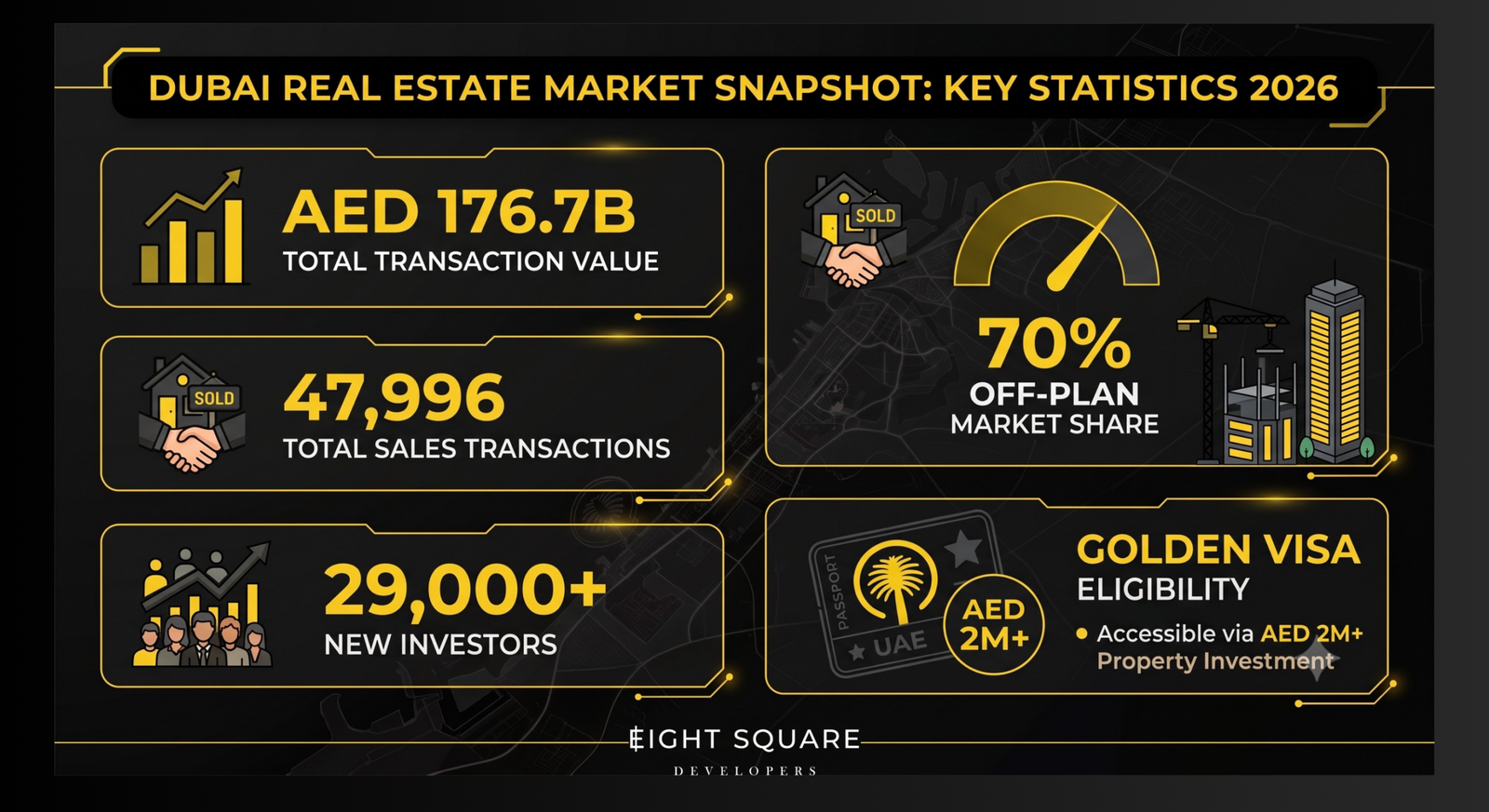
To contextualize developer performance, investors must first understand the macroeconomic data driving the current market. Based on recent data published by DXB Interact and the DLD, the market demonstrates clear signs of structural maturity:
- The Dominance of Off-Plan: Off-plan properties continue to drive the market, consistently accounting for roughly 65% to 70% of total transaction volume.
- Average Rental Yields: Dubai maintains highly competitive rental yields compared to global gateway cities. While average citywide gross yields hover between 5.5% and 7%, specific maturing micro-locations (such as Jumeirah Village Circle and Meydan) frequently record gross yields of 6% to 8%. Prime areas like Downtown Dubai typically yield between 4% and 5%, balanced by stronger capital retention.
- New Investor Inflows: The market continues to attract fresh capital, with tens of thousands of new investors entering the Dubai real estate market annually, heavily driving demand for both ultra-luxury and boutique waterfront properties.
Why Your Choice of Developer Dictates Your ROI
While micro-location dictates tenant demand, the developer dictates the ultimate profitability and safety of your asset.
1. Capital Appreciation and Secondary Market Liquidity
A reputable developer brand directly influences secondary market liquidity. When exiting an investment, buyers and valuation firms assign a premium to homes built by developers with established records of structural integrity. A poorly executed building, even in a prime location, will experience stagnant capital appreciation.
2. Rental Yields and Occupancy Rates
Dubai’s tenant pool is highly selective. Renters gravitate toward buildings offering efficient facility management, functional floor plans, and well-maintained amenities. Top-tier developers ensure their communities are effectively managed post-handover, which reduces vacancy periods, limits structural maintenance requests, and sustains premium annual rental rates.
3. Financial Security and Handover Timelines
A delayed project traps investor capital and delays the onset of rental income. Developers with robust financial liquidity can maintain construction schedules regardless of macroeconomic fluctuations or supply chain disruptions. Timely delivery ensures that ROI projections remain accurate.
How to Evaluate a Developer (The Due Diligence Checklist)
The Dubai market is strictly regulated by RERA (Real Estate Regulatory Agency); however, safeguarding capital requires personal due diligence. Use this verifiable checklist before signing a Sales and Purchase Agreement (SPA) or paying a booking fee:
Legal & Regulatory Verification
- ☐ DLD Registration Check: Is the developer officially licensed with the Dubai Land Department?
- ☐ Project Registration (Mashrooi): Is the specific project legally registered? This can be verified via the DLD’s official Dubai REST application.
- ☐ Active Escrow Account: RERA mandates that all buyer funds for off-plan projects must be deposited into a regulated project-specific Escrow account. Verify the Escrow account number with the DLD before transferring funds.
Track Record & Execution
- ☐ Historical Delivery: Review the developer’s past handovers. Assess their historical adherence to stated timelines.
- ☐ Contractor Verification: A developer conceptualizes the project, but the main contractor builds it. Evaluate the reputation of the appointed engineering and construction firms.
- ☐ Asset Quality Check: Visit previously completed buildings by the same developer. Compare the physical asset’s current condition to the original marketing materials to assess long-term material degradation.
Post-Handover Economics
- ☐ Service Charges: Request the projected annual maintenance fees (measured per square foot). High service charges will significantly reduce net rental yields.
- ☐ Community Management: Identify the appointed facility management company. Building maintenance directly impacts tenant retention and asset valuation.
Developer Trust & Risk Scorecard
To assist in objective evaluation, the calculator block below represents where your web developer can embed an interactive evaluation widget on the live page:
Choosing a Developer Based on Your Investment Goal
Different developers cater to different investment strategies. Define your financial intent before selecting a builder.
1. Strategy: Maximum Capital Appreciation (Resale)
- Focus: Entry price per square foot compared to the district average, and infrastructure maturity timelines.
- Recommended Developer Types: Master developers launching the initial phases of new mega-communities, or boutique developers securing plots in rapidly gentrifying micro-locations before peak pricing.
2. Strategy: Highest Rental Yield (Passive Income)
- Focus: Functional floor plans, proximity to transit hubs, and low post-handover service charges.
- Recommended Developer Types: Mid-market developers and boutique firms offering adaptable layouts (e.g., units with study rooms or maid’s rooms) which appeal to a broader tenant demographic, including remote workers.
3. Strategy: Luxury Lifestyle & Trophy Assets
- Focus: Global brand prestige, exclusive waterfront access, and hospitality-integrated facility management.
- Recommended Developer Types: Ultra-luxury specialists and developers partnered with international luxury or automotive brands.
4. Strategy: Long-Term Family Living
- Focus: Build quality, community infrastructure (schools, parks, clinics), and low-density planning.
- Recommended Developer Types: Established master-community developers with a history of delivering self-sustaining suburban ecosystems.
Best Developers by Dubai Area (Micro-Location Guide)
Real estate performance is highly localized. Below is an overview of the developers operating heavily within Dubai’s most active investment clusters:
- Downtown Dubai & Business Bay: Dominated by Emaar Properties, DAMAC Properties, and Select Group. These areas are characterized by high-rise luxury and are suited for short-term holiday rentals and corporate leasing.
- Palm Jumeirah & Dubai Islands: Nakheel remains the primary master developer for coastal reclamation projects, joined by ultra-luxury residential projects from Omniyat and Ellington Properties.
- Meydan (MBR City) & District 11: A maturing, low-density extension of the city center. It features established villa communities by Sobha Realty and MAG, alongside emerging boutique residential projects by Eight Square Developers.
- Dubai Hills Estate: A premier suburban community co-developed by Emaar and Meraas, recognized for its extensive parklands, golf course, and strong capital retention.
- Jumeirah Village Circle (JVC): A high-density residential hub leading the city in transaction volume. Dominated by Binghatti, Danube, and Azizi Developments, offering accessible entry points for yield-focused investors.
- Dubai South: Positioned as a long-term logistics and aviation hub, primarily driven by Emaar South and Dubai South Properties.
Comprehensive Profiles: Master Developers & Volume Leaders
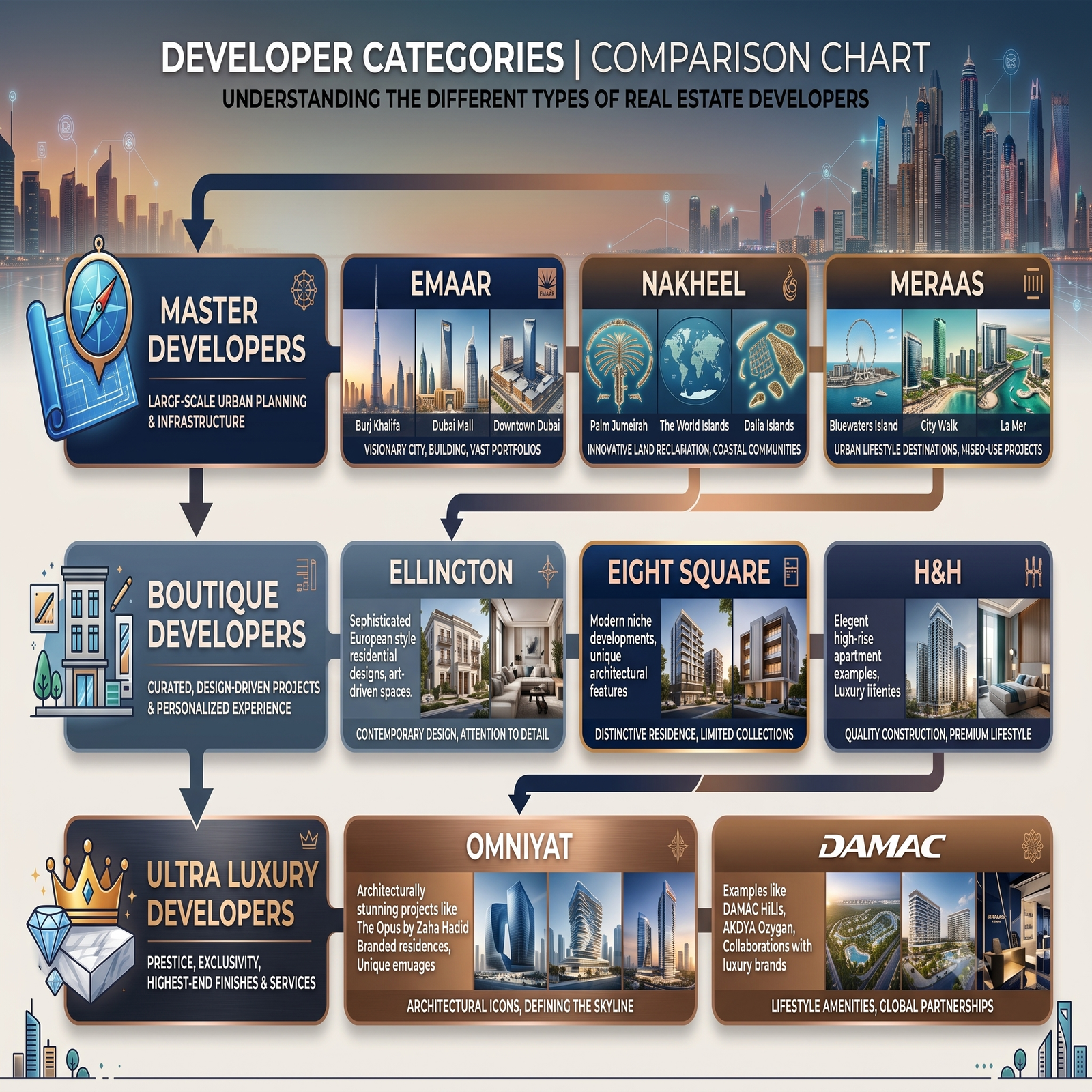
1. Emaar Properties
- Background: Emaar is the largest real estate developer in Dubai by market capitalization. As a publicly traded entity with government backing, it has fundamentally shaped modern Dubai’s infrastructure.
- Specialization: Large-scale, self-sustaining master communities and global architectural landmarks.
- Signature Projects: Burj Khalifa, The Dubai Mall, Downtown Dubai, Dubai Hills Estate, and Dubai Creek Harbour.
- Strengths: High secondary market liquidity, robust community management, and consistent historical delivery.
- Ideal Buyer: Risk-averse investors, families, and buyers seeking established infrastructure.
- Investment Considerations: Emaar properties typically command a premium entry price per square foot due to brand equity, though this is frequently offset by strong resale demand.
2. Nakheel
- Background: Operating under Dubai Holding, Nakheel is known for pioneering large-scale coastal reclamation projects that expanded Dubai’s navigable waterfront.
- Specialization: Waterfront master-planning, man-made islands, and expansive retail developments.
- Signature Projects: Palm Jumeirah, Palm Jebel Ali, Dubai Islands, and Jumeirah Islands.
- Strengths: Exclusive control over prime coastal plots and a comprehensive portfolio of high-value waterfront estates.
- Ideal Buyer: High-net-worth individuals and investors targeting premium waterfront capital appreciation.
- Investment Considerations: Mega-island projects operate on extended, multi-year maturation timelines.
3. DAMAC Properties
- Background: DAMAC operates internationally and is one of the most prominent luxury developers in the Middle East, known for expansive marketing and brand alignment.
- Specialization: Branded luxury towers and sprawling, amenity-focused master communities.
- Signature Projects: DAMAC Hills, DAMAC Lagoons, Safa Two (de GRISOGONO), and numerous Cavalli-branded towers.
- Strengths: Strategic partnerships with global fashion and automotive brands and comprehensive, resort-style community amenities.
- Ideal Buyer: Status-conscious buyers and investors looking for highly amenitized living environments.
- Investment Considerations: DAMAC frequently utilizes flexible payment plans, lowering the barrier to entry for luxury inventory.
4. Sobha Realty
- Background: Founded by PNC Menon, Sobha has a robust background in interior decoration and contracting.
- Specialization: “Backward Integration”—a model where the developer manages architecture, engineering, material sourcing, and construction internally.
- Signature Projects: Sobha Hartland, Sobha Hartland II, and Sobha Reserve.
- Strengths: Strict quality control over construction materials and finishes, leading to highly consistent handover standards.
- Ideal Buyer: End-users and investors who prioritize structural longevity and detailed craftsmanship.
- Investment Considerations: Their internal supply chain management mitigates the risk of construction delays caused by third-party contractor disputes.
5. Meraas
- Background: A subsidiary of Dubai Holding, Meraas is responsible for integrating residential real estate with major retail and leisure destinations.
- Specialization: Lifestyle-led, design-focused urban districts and low-rise coastal communities.
- Signature Projects: City Walk, Bluewaters Island, Port de La Mer, and Madinat Jumeirah Living.
- Strengths: Creating highly pedestrian-friendly, culturally active neighborhoods that attract affluent expatriates.
- Ideal Buyer: Urban professionals and investors targeting high-income, lifestyle-focused tenants.
- Investment Considerations: Proximity to curated retail and dining hubs allows Meraas properties to sustain premium rental rates.
6. Aldar Properties
- Background: Aldar is the primary real estate developer in Abu Dhabi. It has expanded its footprint into the Dubai market through strategic acquisitions and joint ventures.
- Specialization: Master-planned communities with an emphasis on wellness, nature, and sustainability.
- Signature Projects (Dubai): Haven by Aldar and Athlon.
- Strengths: Strong financial foundations, established corporate governance, and expertise in large-scale suburban planning.
- Ideal Buyer: Families and long-term investors seeking reliable, well-planned suburban environments.
- Investment Considerations: Aldar provides a highly capitalized alternative to Dubai-native master developers for suburban community investments.
7. Majid Al Futtaim Real Estate
- Background: Known primarily for operating major retail malls across the MENA region, the group also maintains a highly regarded residential community development division.
- Specialization: Premium, integrated suburban master communities centered around leisure and retail.
- Signature Projects: Tilal Al Ghaf.
- Strengths: Deep expertise in retail integration and creating holistic, family-oriented environments with high-end recreational features.
- Ideal Buyer: Discerning families and long-term end-users.
- Investment Considerations: High demand from end-users typically results in strong secondary market price retention.
8. Wasl Properties
- Background: A major asset management group operating a vast portfolio of real estate on behalf of the Dubai government.
- Specialization: Extensive residential leasing portfolios, hospitality developments, and prime freehold/leasehold residential projects.
- Signature Projects: Wasl1, 1 Residences, and Wasl Tower.
- Strengths: Access to highly strategic, central land banks near established business and historical districts.
- Ideal Buyer: Investors prioritizing central geographic connectivity.
- Investment Considerations: Wasl’s developments often occupy prime locations that connect Dubai’s established commercial centers with newer freehold zones.
Comprehensive Profiles: High-Volume & Boutique Developers
9. Binghatti Developers
- Background: Binghatti has scaled rapidly to become a market leader in transaction volume, known for highly recognizable facade designs.
- Specialization: Mid-market residential towers and ultra-luxury branded collaborations.
- Signature Projects: Bugatti Residences, Mercedes-Benz Places, and numerous towers in Jumeirah Village Circle (JVC) and Dubai Silicon Oasis.
- Strengths: Efficient construction pacing, frequently resulting in early or on-time project handovers.
- Ideal Buyer: Yield-focused investors in the mid-market, and branded-residence buyers in the luxury sector.
- Investment Considerations: The developer’s distinct architectural aesthetic is highly visible, making it a prominent feature in several high-density rental districts.
10. Ellington Properties
- Background: Ellington established a strong market presence by focusing on aesthetic design and community-focused amenities rather than sheer volume.
- Specialization: Design-led, boutique residential buildings with contemporary, hotel-inspired interiors.
- Signature Projects: Belgravia, Ocean House, and Mercer House.
- Strengths: High standard of interior design and well-appointed communal spaces, leading to strong tenant demand.
- Ideal Buyer: Design-conscious investors and expatriate end-users.
- Investment Considerations: Properties often achieve higher rental rates compared to adjacent buildings due to their specific design appeal.
11. OMNIYAT
- Background: Omniyat operates within the ultra-luxury segment, focusing on bespoke residential and commercial projects.
- Specialization: High-end, architecturally complex developments managed by luxury hospitality brands.
- Signature Projects: The Opus, The Lana, and One at Palm Jumeirah.
- Strengths: Collaboration with globally renowned architects and uncompromising focus on privacy and luxury materials.
- Ideal Buyer: Ultra-high-net-worth individuals seeking exclusive trophy assets.
- Investment Considerations: Pricing is positioned at the top of the market spectrum, reflecting the bespoke nature and limited supply of the assets.
12. Select Group
- Background: A privately-owned developer with a substantial portfolio of completed high-rise developments in prime Dubai locations.
- Specialization: Premium waterfront high-rises and urban mixed-use developments.
- Signature Projects: The Peninsula, Six Senses Residences, and Marina Gate.
- Strengths: Consistent delivery of large-scale towers in dense, prime locations such as Dubai Marina and Business Bay.
- Ideal Buyer: Investors seeking assets in established, high-demand commercial and waterfront hubs.
- Investment Considerations: Select Group properties maintain a strong presence in the secondary market and are suitable for consistent long-term leasing.
13. Danube Properties
- Background: Originating as a building materials supplier, Danube expanded into real estate development with a focus on affordability and accessible financing.
- Specialization: Furnished apartments paired with long-term, post-handover payment plans.
- Signature Projects: Viewz, Diamondz, and multiple developments in JVC and Maritime City.
- Strengths: Lowering the barrier to entry for property investment through structured 1% monthly payment plans.
- Ideal Buyer: First-time buyers and investors prioritizing cash flow management.
- Investment Considerations: While the 1% payment plan assists with liquidity, investors should evaluate the total unit price relative to the current market average in the specific district.
14. Azizi Developments
- Background: A high-volume developer with a broad portfolio spanning multiple districts, including significant master-planned projects.
- Specialization: Mid-market community developments and high-rise residential towers.
- Signature Projects: Azizi Riviera (Meydan), Azizi Venice, and Burj Azizi.
- Strengths: Providing inventory across a wide range of price points and locations, from affordable segments to emerging luxury corridors.
- Ideal Buyer: Investors seeking entry-level pricing in developing areas.
- Investment Considerations: Prospective buyers should review the specific delivery history and finishing standards of the exact project phase they are considering.
15. MAG Property Development
- Background: The real estate division of a multinational conglomerate, MAG focuses on residential communities and wellness-integrated living.
- Specialization: Premium townhouses and specialized wellness real estate.
- Signature Projects: MAG City and Keturah Reserve.
- Strengths: Integration of “Bio-living” concepts, prioritizing air quality, natural light, and green spaces within the architectural design.
- Ideal Buyer: Health-conscious families and investors targeting the growing wellness real estate sector.
- Investment Considerations: Projects like Keturah Reserve represent a structural shift toward low-density, health-focused living environments.
16. Eight Square Developers
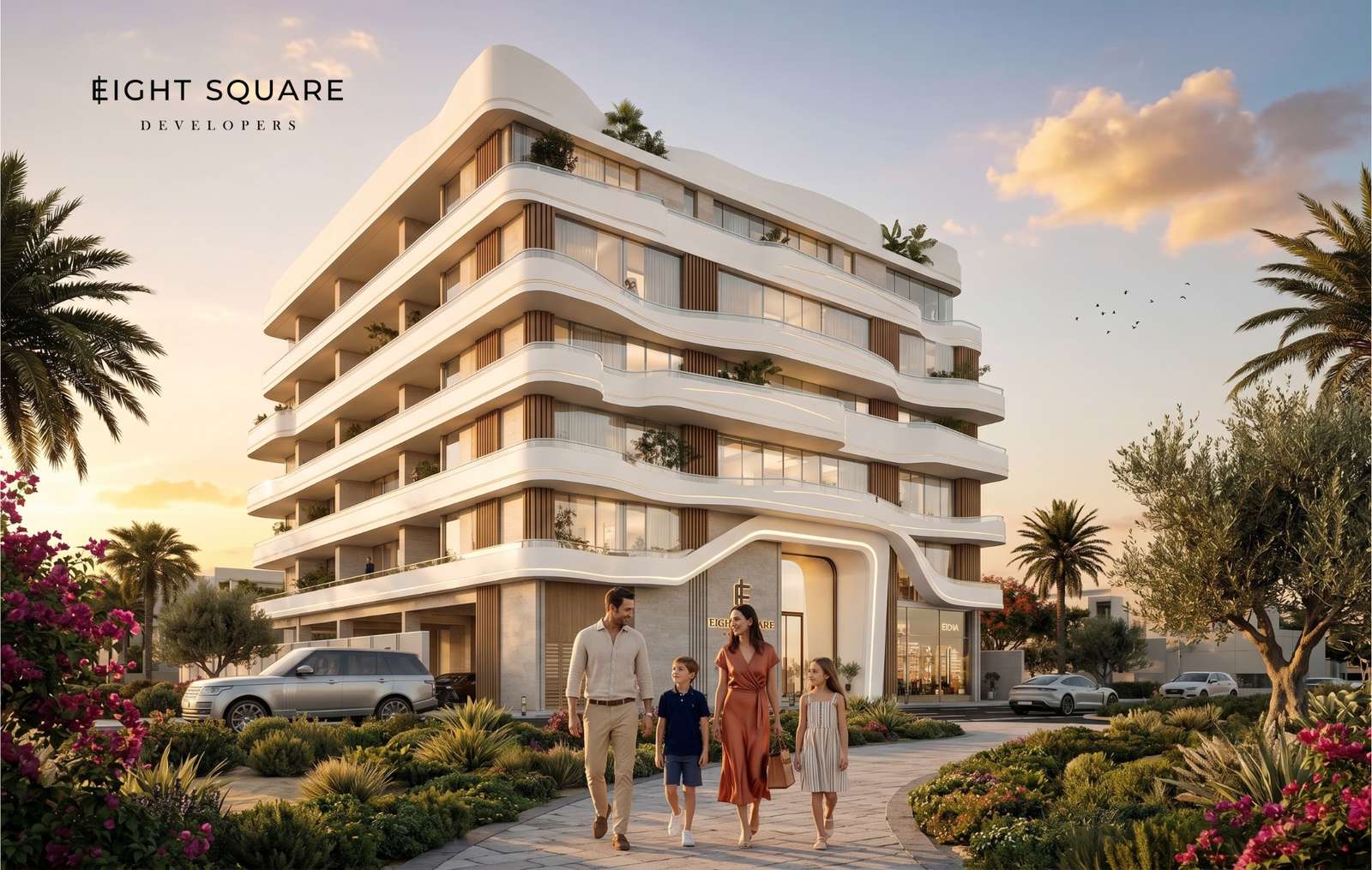
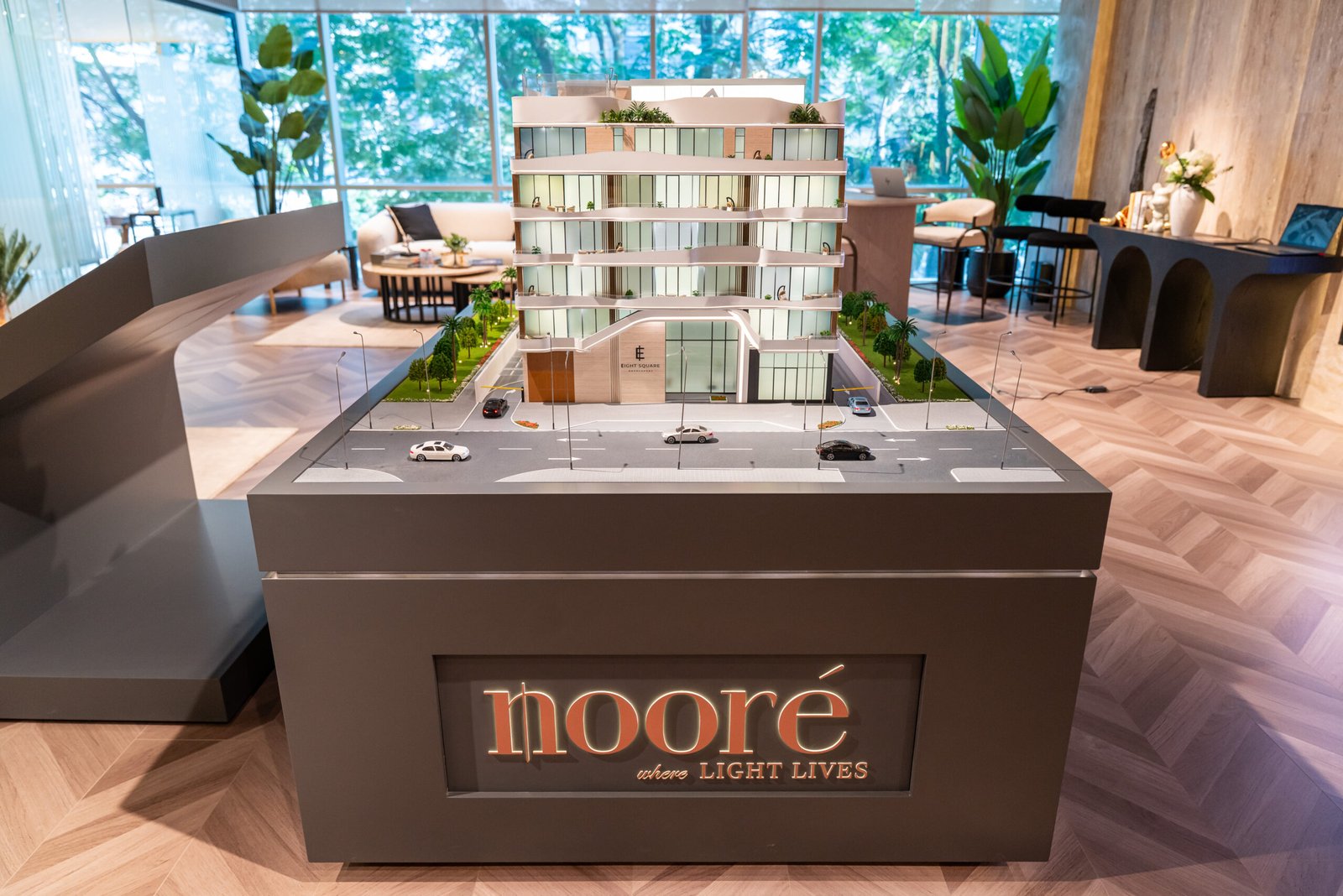
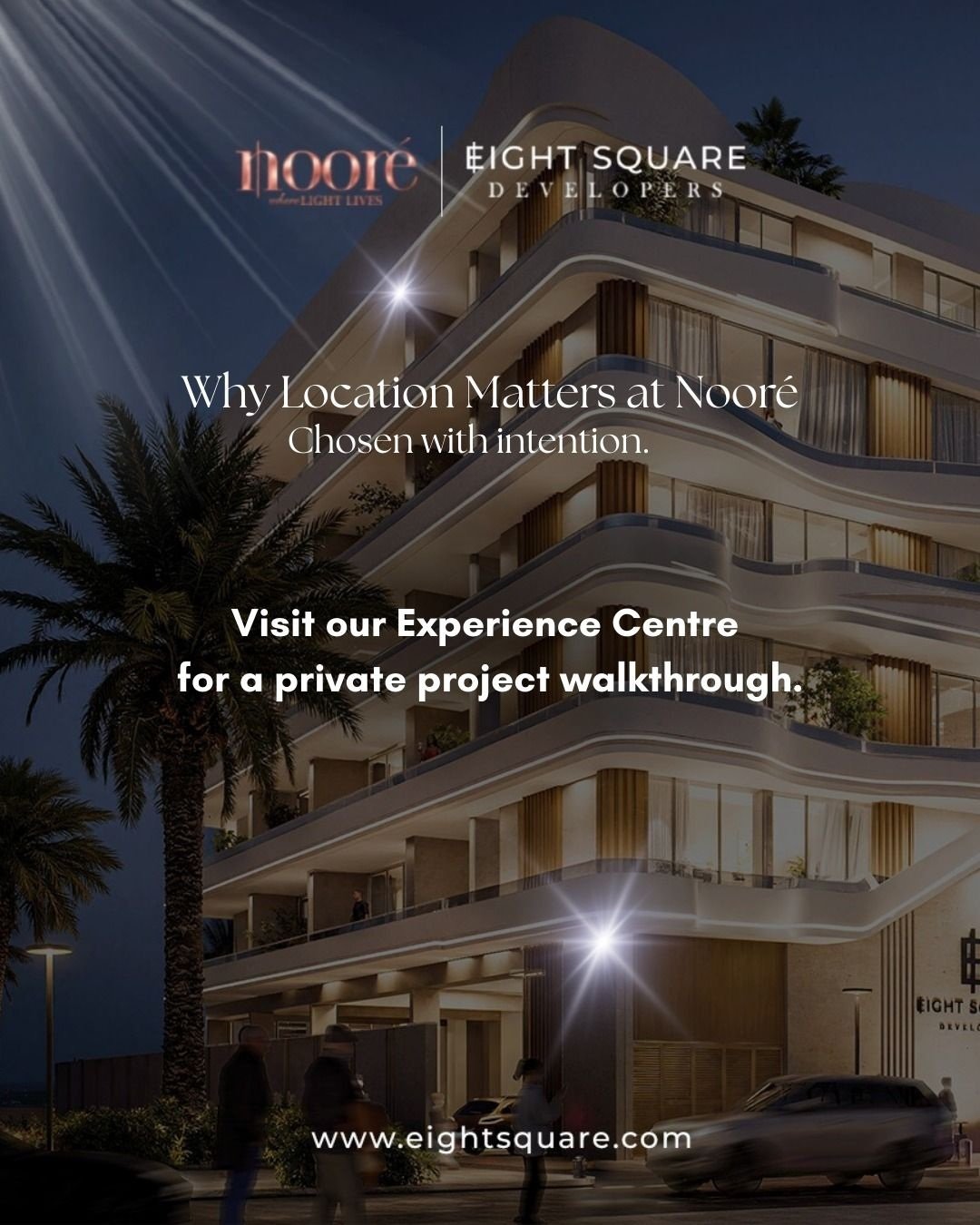
- Background: Eight Square Developers is an emerging boutique developer entering the Dubai market. The company is built upon a 47-year international construction and engineering heritage derived from DCC Developers and Dascon Construction Company.
- Specialization: Low-density boutique residential projects focusing on functional floor plans and Mediterranean-inspired architecture.
- Signature Projects: Nooré (Meydan District 11).
- Strengths: Integration of adaptable floor plans (including 1.5, 2.5, and 3.5-bedroom layouts designed for remote work functionality), and an emphasis on verifiable construction transparency with continuous site updates.
- Ideal Buyer: Yield-focused investors seeking functional layouts, and buyers prioritizing lower-density communities.
- Investment Considerations: As an emerging developer in the UAE, Eight Square is primarily focused on specific, high-growth micro-locations such as Meydan District 11.
Explore the Floor Plans and Payment Structures for Nooré in Meydan
The Extended Developer Comparison Matrix
This matrix categorizes developers based on their primary operational models and typical market offerings.
| Developer | Primary Focus | Typical Property Types | Payment Plan Availability | Target Buyer Profile | Key Micro-Locations |
|---|---|---|---|---|---|
| Emaar | Master Communities | Villas, High-Rise Apts | Standard Construction | Families, Safe-Haven | Downtown, Dubai Hills |
| Nakheel | Waterfront / Islands | Luxury Villas, Apts | Standard Construction | UHNWIs, Beachfront | Palm Jumeirah, Dubai Islands |
| DAMAC | Branded Luxury | Branded Apts, Villas | Flexible / Promos | Lifestyle | DAMAC Hills, Business Bay |
| Sobha | In-House Build Quality | Premium Apts, Villas | Standard Construction | Quality-Focused | Meydan (MBR City) |
| Aldar | Wellness Suburbs | Villas, Townhouses | Standard Construction | Families | Dubailand, Dubai South |
| Binghatti | Fast Volume Delivery | Mid-Market & Branded | Standard Construction | Yield Investors | JVC, Business Bay |
| Ellington | Design-Led Homes | Premium Apartments | Standard Construction | Design-Conscious | JVC, JLT, Palm Jumeirah |
| Eight Square | Boutique Living | Adaptable Apts (1.5-3.5 BR) | Flexible (e.g., 40/60) | High-Yield / Low-Density | Meydan District 11 |
| Danube | Affordable Luxury | Furnished Apartments | 1% Post-Handover | First-Time / Cash Flow | JVC, Maritime City |
| Omniyat | Ultra-Luxury Bespoke | Penthouses, Mansions | Standard Construction | Global Elite, Trophy | Business Bay, Palm Jumeirah |
Top Investment Mistakes to Avoid
Even within a regulated market, strategic errors can impact investment returns. Avoid the following:
1. Ignoring Post-Handover Service Charges
Investors often calculate expected ROI based solely on purchase price and gross rent. It is essential to account for DLD-approved annual service charges. Amenity-heavy luxury towers can carry high maintenance fees per square foot, which reduces net passive income. Always request historical or projected service charge data.
2. Overlooking Floor Plan Functionality
While a branded lobby provides visual appeal, tenants ultimately rent functional living space. A developer offering an efficiently designed 1.5-bedroom unit (featuring a usable study) may generate a higher rental yield than a poorly configured standard 1-bedroom unit in a comparable area.
3. Investing in Oversupplied Micro-Locations
Purchasing inventory in areas with massive pipelines of identical upcoming units can lead to intense competition when leasing or selling. Analyzing supply data (via DLD or DXB Interact) helps identify constrained-supply clusters where future construction is limited.
4. Misunderstanding Post-Handover Payment Plans (PHPP)
Extended payment plans are effective for managing cash flow. However, buyers must review the contract to ensure they can manage any required balloon payments upon handover, and verify the developer’s specific rules regarding secondary market resale before the completion of the payment plan.
Frequently Asked Questions (FAQs)
1. Which developer offers the best ROI in Dubai?
ROI varies by strategy. For high rental yields, developers focusing on mid-market and maturing communities often achieve gross yields of 6% to 8%. For capital appreciation, early-phase master communities and waterfront developers historically show strong performance.
2. How do I check if a developer is registered with RERA?
You can verify a developer’s credentials, trade license, and project registration status through the Dubai Land Department’s official “Dubai REST” application or the DLD website.
3. What is an Escrow account in Dubai real estate?
An Escrow account is a highly regulated bank account mandated by RERA for off-plan projects. Buyer funds are deposited here rather than the developer’s corporate account. Funds are only released to pay contractors upon independent certification of specific construction milestones.
4. Is it safe to buy off-plan property in Dubai?
Yes, off-plan investment is highly regulated. The implementation of Escrow laws protects buyer capital. However, market risk (pricing fluctuations) and delivery risk (construction timelines) still exist, making developer selection critical.
5. Which Dubai areas have the highest rental yields?
According to recent market data, more affordable and maturing communities generally offer the highest percentage yields. Areas such as Jumeirah Village Circle (JVC), Town Square, and specific clusters in Meydan typically provide strong gross yields.
6. Do developers allow you to sell an off-plan property before handover?
Yes, this is known as “flipping.” However, developers stipulate that a certain percentage of the property value (typically 30% to 40%) must be paid before they will issue a No Objection Certificate (NOC) allowing the resale.
7. Are boutique developers reliable compared to master developers?
Established boutique developers are highly reliable as they manage fewer simultaneous projects, allowing for stringent quality control and focused community development. Ensure they adhere to all RERA Escrow regulations.
8. How do service charges impact my real estate investment?
Service charges are annual fees calculated per square foot for building maintenance. If an apartment generates AED 100,000 in rent but carries a service charge of AED 20,000, your net income is reduced to AED 80,000, directly lowering your final ROI percentage.
9. Can foreign investors buy freehold property in Dubai?
Yes. Foreign nationals can purchase freehold property (granting perpetual ownership of both the structure and the land) in officially designated investment zones, which include most major areas like Downtown, Dubai Marina, and Meydan.
10. How does buying property secure a UAE Golden Visa?
The UAE offers a 10-year Golden Visa to investors who purchase property valued at a minimum of AED 2,000,000. This applies to both ready and off-plan properties, subject to specific equity payment thresholds established by the DLD.
11. Which developers offer post-handover payment plans?
Post-handover payment plans (PHPP) vary by market conditions. Currently, developers such as Danube frequently offer 1% monthly plans. Other developers may offer 40/60 or 50/50 structures to assist with financing flexibility.
12. Which developer is best for luxury villas?
Nakheel, Emaar Properties, Sobha Realty, and Majid Al Futtaim are among the leading developers for high-end villas, focusing on premium community infrastructure, golf courses, and waterfront access.
13. What is the difference between RERA and the DLD?
The Dubai Land Department (DLD) is the primary government body overseeing all real estate affairs in the emirate. RERA (Real Estate Regulatory Agency) is the regulatory arm within the DLD responsible for enforcing policies, licensing professionals, and managing Escrow compliance.
14. Should I invest in an apartment or a townhouse?
Apartments typically generate higher gross rental yields, making them favorable for cash-flow investors. Townhouses and villas often experience stronger long-term capital appreciation and attract stable, long-term family tenants.
15. How do I verify construction progress from overseas?
The DLD’s Dubai REST app provides government-audited percentage completion updates for all registered off-plan projects. Additionally, transparent developers provide regular site photos, live camera feeds, and video updates to their investors.
Data Sources & Regulatory References
To verify the data and compliance standards discussed in this guide, please refer to the following authoritative entities:
- Dubai Land Department (DLD): The official government entity for property registration, Escrow verification, and legal frameworks. (dubailand.gov.ae)
- Real Estate Regulatory Agency (RERA): The regulatory arm of the DLD governing developer licensing.
- DXB Interact: Real-time Dubai real estate performance data, operating in partnership with the DLD.
- Global Advisory Reports: Market statistics, yield data, and demographic trends are periodically published by recognized valuation and advisory firms including CBRE, Knight Frank, JLL, and Savills.
Disclaimer: The real estate data, regulations, and market statistics cited in this guide reflect the landscape based on DLD metrics and recognized advisory reports at the time of publication. Real estate investments carry inherent financial risks. Buyers are strongly encouraged to conduct independent financial and legal due diligence before entering into any transaction.